Germany
FIP Information
There are over 80 different operators in Germany, but FIP is not valid with most of them. FIP discounts are available with the following operators:
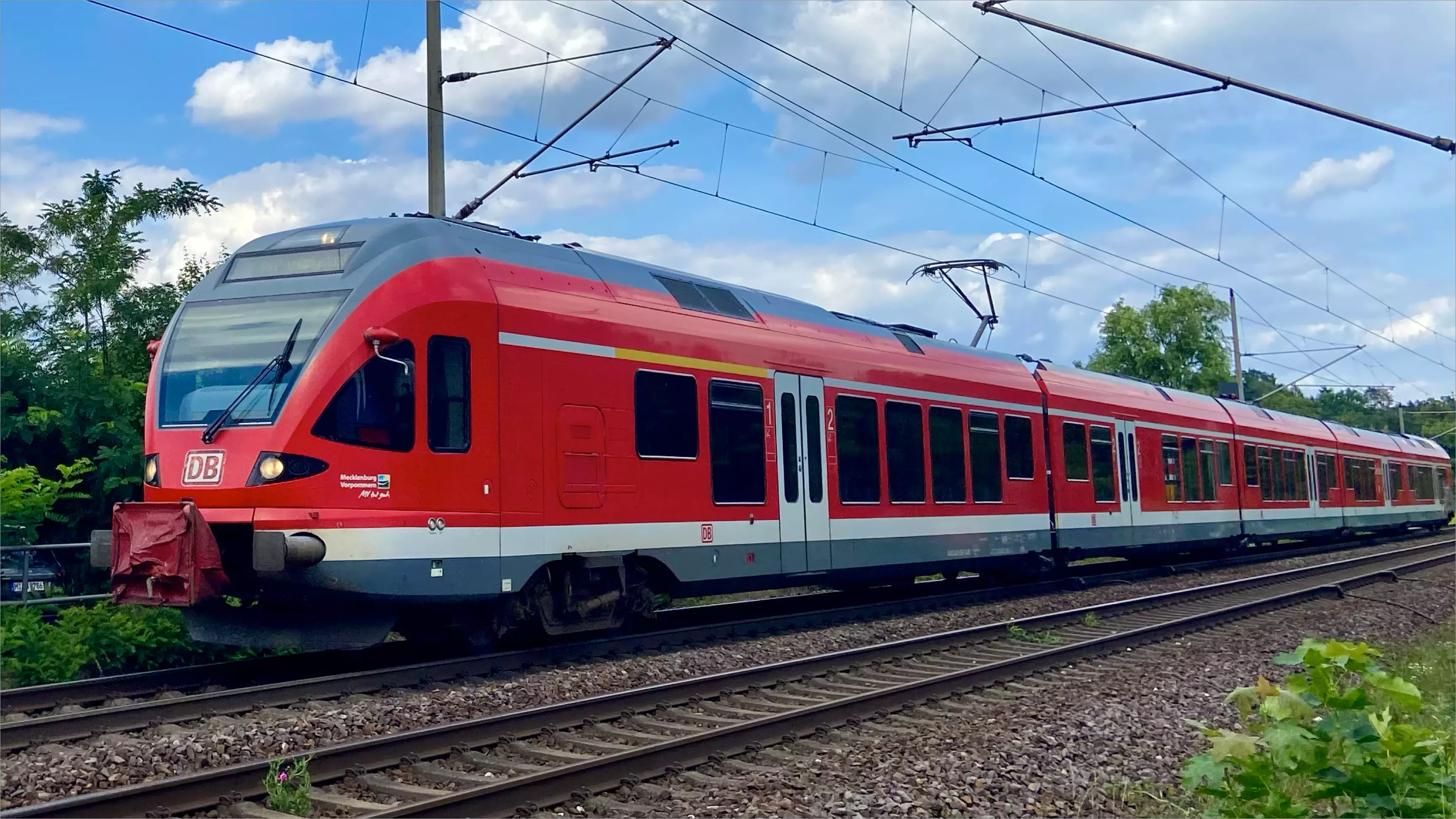
- The state railway company Deutsche Bahn (DB) operates a large number of long-distance and regional lines.
- The Bodensee-Schiffsbetriebe offer ferry services across Lake Constance.
- With Eurostar, travel is possible between the UK, France, the Netherlands, Belgium, and Germany.
Due to the large variety of operators, it is advisable to plan your trip in advance to make use of FIP. With the exception of Flixtrain, WESTbahn, and some night train connections, German long-distance trains can be used. In regional transport, DB operates many lines, making travel possible there as well.
Interesting
The rail network in Germany covers around 39,200 km, making it one of the largest in Europe. In addition to heavily used main lines, there are many branch lines operated by associations and local actors.
The German state and Deutsche Bahn are currently investing heavily in the expansion and general renovation of the network. By 2030, central corridors are to be upgraded to a high-performance network. Many stations are also being modernized and developed into “stations of the future”. The most important long-distance axes include:
- Berlin – Munich via the high-speed line through Erfurt
- Cologne – Frankfurt with ICE speeds up to 300 km/h
- Hamburg – Stuttgart and Dortmund – Munich as north-south connections
- Ruhr area – Berlin via Hanover
The train fleet is also being modernized, so that mainly modern trains with high-quality equipment and comfort are used in long-distance transport. In regional transport, there are many different vehicle types, which also vary greatly in quality.
Due to many construction sites, overloaded routes, and disruptions, the punctuality rate in long-distance transport is quite low at under 65%. The situation is somewhat better in regional transport, but there are also challenges here. Between the major cities, there are hourly long-distance and regional connections, which are supplemented by parallel sections, resulting in an even tighter schedule. In metropolitan areas such as Berlin, Hamburg, or Munich, the frequency is very high—often every 10 to 20 minutes. In rural regions, however, connections are often sparse and irregular.
Due to its central location, there are many connections to other European countries, both during the day and at night.
The following routes are particularly recommended:
- Black Forest Railway (Karlsruhe – Konstanz): Passes through 39 tunnels and offers spectacular views of the Black Forest
- Moselle Valley Railway (Koblenz – Trier): Romantic ride along the Moselle with views of vineyards and castles
- Middle Rhine Railway (Mainz – Cologne): Along the Rhine with views of the Loreley, castles, and wine villages
- Lake Constance Belt Railway (Radolfzell – Lindau): With views of Lake Constance and the Alps
- National Park Railway (Dresden – Bad Schandau): Through Saxon Switzerland with views of famous rock formations
- Marsh Railway (Hamburg – Sylt): Over the Hindenburgdamm directly to the North Sea island of Sylt
- High-speed line Cologne – Frankfurt: At 300 km/h through the landscape
The “Allianz pro Schiene” annually awards the most beautiful stations in the country. An overview of the awarded stationscan be found on the association’s website.
Arrival and Border Points
Belgium
From Belgium, the cross-border ICE to Frankfurt / Cologne / Aachen can be used. There is also a regional train operated by SNCB between Liège and Aachen. In both cases, an additional ticket for the Belgian SNCB section is required.
With Eurostar (formerly Thalys), the DB network can also be reached from Belgium. Here, a special FIP Ticket from Eurostar is required for the entire route (including within Germany) (see Eurostar).
Denmark
From Denmark, the direct EC Copenhagen – Hamburg can be used, which runs several times a day (every 2 hours in high season). These trains are always very busy, so it is advisable to book a reservation early. Alternatively, there are several IC trains daily from Fredericia to Flensburg.
It is also possible to enter via Tønder by regional train. However, since neither DSB on the Danish side nor DB on the German side operates here, FIP discounts are not available on this route. Alternatively, you can enter by ferry to Puttgarden or Warnemünde.
France
Long-distance cooperation trains of SNCF and Deutsche Bahn run between France and Germany. These are operated as TGV or ICE trains and run from Paris via Strasbourg or Saarbrücken to Munich or Karlsruhe, Mannheim, and Frankfurt (Main). Reservations are only mandatory within France. In Germany, the trains can be used without a reservation. Since the reservation requirement on the route via Strasbourg and Karlsruhe applies up to the border point Kehl (Gr), reservations are also mandatory for journeys between Strasbourg and Germany. These cross-border FIP tickets can also be purchased online by Deutsche Bahn employees, see Booking Options – Online.
A cheap option for travel from Strasbourg to Germany is the tram from Strasbourg to Kehl, for which a cheap tram ticket is required. From Kehl, there is a connection to the Ortenau S-Bahn line RS4 to Offenburg. FIP is not valid on this line, but the Deutschlandticket is (DB employee discounts are only valid here with NE tickets).
In addition to long-distance connections, there are also a number of regional train connections. To use these for the entire route, FIP Coupons from DB and SNCF or a through FIP 50 Ticket are required. Examples are the routes between Metz and Saarbrücken or Wissembourg and Neustadt an der Weinstraße. The trains between Strasbourg and Kehl/Offenburg are operated on the German side by SWEG, where DB FIP tickets are not valid.
Luxembourg
From Luxembourg, cross-border regional trains run to Koblenz / Wittlich / Trier. For the Luxembourg section, no ticket is required in second class, as regional transport is free there. For the German section, a FIP Ticket (Coupon or FIP 50) from DB is required.
Once a day, there is also a direct train from CFL from Luxembourg to Düsseldorf. On the Düsseldorf – Koblenz section, this is operated as an IC long-distance train.
There is also a CFL long-distance bus from Luxembourg to Saarbrücken, but no FIP discount is granted here.
Netherlands
From Amsterdam, the cross-border ICE to Frankfurt / Cologne / Düsseldorf can be used to access the DB network. For cross-border journeys, FIP Tickets from NS and DB are required.
There are also various regional trains, but only two on which FIP is valid:
- Enschede to Dortmund
- Enschede to Münster
Here, DB Regio operates on the German section. With an additional ticket for the Dutch NS section or a through FIP 50 Ticket, you are covered.
On the RE connections Venlo – Hamm and Arnhem – Düsseldorf, the Deutschlandticket is valid for the entire route. If you have this ticket, you can also enter Germany this way.
Austria
Between Austria and Germany, there are, in addition to various regional train connections, two long-distance connections:
- An
ICEline from Frankfurt / Cologne (or individual trains from Berlin) via Nuremberg, Passau, and Linz to Vienna. ICE,RJ, andICtrains from various destinations in Austria via Salzburg to Munich.
For the Austrian section, a FIP Ticket from ÖBB is required.
There are also some regional train connections, for which FIP Coupons from ÖBB and DB or a through FIP 50 Ticket are always required.
Poland
Eurocity trains run every 2 hours during the day between Warsaw and Berlin via the border crossing at Frankfurt (Oder). There are also individual services between Gdynia / Kraków / Przemyśl and Berlin in the timetable.
In addition to long-distance trains, there are also regional trains every 2 hours between Rzepin / Zielona Góra and Frankfurt (Oder), which, like the EC trains, can be used with PKP FIP Tickets plus a ticket for the DB section. Since December 2025, the border crossing at Horka is also used for direct trains between Leipzig and Wrocław / Kraków. A reservation is required for all cross-border long-distance trains.
The other border crossings are currently only served by regional trains. For trains via Forst, Grambow, Guben, and Tantow, the same rule applies as at Frankfurt (Oder): PKP FIP Tickets plus a ticket for the DB section are required. At Kostrzyn, the operator on the German side is Niederbarnimer Eisenbahn (NEB), where FIP Tickets are not valid; for the Polish section, PKP FIP Tickets should be valid. A special case is the border crossing at Zgorzelec, where no ticket is required for the section between Görlitz (Germany) and Zgorzelec station.
Czech Republic
There are various rail border crossings from the Czech Republic into the German network. The best known is Schöna, used by international long-distance trains between the two countries. There are also cross-border regional trains every 2 hours, which, like the EC/RJ trains, are operated in cooperation by Deutsche Bahn and ČD, so FIP Coupons from both countries or a through FIP 50 Ticket are valid for the journey.
The same applies to the northern section of the regional train, which crosses the border again at Dolní Poustevna (route Decin – Bad Schandau – Sebnitz – Rumburk).
The other border crossings are only served by regional trains. The easiest is Bayerisch Eisenstein, as this is not only a border point but also the border station. On the Czech section, a FIP Ticket / Coupon from ČD is sufficient to continue to Germany.
At Potůčky on the Karlovy Vary – Johanngeorgenstadt route, cross-border travel is possible with FIP Tickets from DB and ČD. The other border crossings are a bit more complicated.
At Cheb, the cross-border trains of DB Regio can be used with FIP Coupons from both countries or a through FIP 50 Ticket; for the trains operated by Agilis (on the Czech side by ČD), a regular ticket must be purchased for the German section (the Deutschlandticket is also valid here from Schirnding).
The same applies to the northern border crossing at Aš. It is similar at Furth im Wald, where the cross-border regional express, which is an EC in the Czech section, can be used with a FIP Ticket from ČD in the Czech section, but a regular ticket is required for the German section.
At the border crossings Hrádek nad Nisou (route Liberec – Zittau), Varnsdorf (route Zittau – Seifhennersdorf), Vejprty (route Chomutov – Cranzahl, only served in summer on weekends and holidays), and Vojtanov (route Cheb – Zwickau), FIP is useless, as on both sides of the border the trains are operated by private railways that do not accept FIP.
Switzerland
Switzerland has several cross-border connections to Germany.
- The most used is from Basel into the German network. Here,
ICEtrains run once or twice per hour per direction during the day. These run between Basel and Mannheim and then continue either towards Frankfurt (Main), Kassel, Hamburg or Frankfurt (Main), Cologne, Dortmund, Hanover. Some trains start in Switzerland in Zurich, Interlaken, Bern, or Chur. - There are also occasional
ECandECEtrains on this route, also heading towards Mannheim. - Regional trains also run from Basel Bad Bf to Singen (Hohentwiel), Lauchringen, Freiburg, and Friedrichshafen.
Note that DB FIP Coupons are valid from Basel Bad Bf (Badischer Bahnhof), as this is an official border station (border point) of DB and SBB.
On the Basel SBB – Zell(Wiesental) route, S-Bahn line 6 also operates, but in Germany it is operated by SBB GmbH and can only be used with SBB FIP Coupons on the Swiss section between Basel SBB and Basel Bad Bf.
To enter Germany from Switzerland without using an SBB Ticket (e.g. FIP Coupon or FIP 50), S-Bahn line 6 from Basel SBB to Basel Badischer Bahnhof can be used with the Deutschlandticket. 1
Other important cross-border connections are the routes Zurich – Stuttgart via Schaffhausen (joint border station of SBB and DB) and Zurich – Munich via Lindau, St. Margrethen, and St. Gallen, on which IC or ECE trains run. When arriving from St. Gallen to Lindau via St. Margrethen, the route passes through Austria for a short distance. Therefore, a ticket for ÖBB is required here.
For this short section, it is best to buy a FIP 50 Ticket, otherwise, in theory, the ÖBB long-distance surcharge must be paid.
There are also some cross-border regional train connections. Germany can also be reached from Switzerland by ferries, some of which can be used with FIP.
Sources
Operators supporting FIP in Germany
 Bodensee-Schiffsbetriebe
 DB
DB Eurostar
Operators without FIP in Germany
- Abellio Rail Mitteldeutschland GmbH
- agilis – ag
- AKN Eisenbahn GmbH – AKN
- Albtal-Vekehrs-Gesellschaft mbH
- alex - Die Länderbahn GmbH DLB
- Arriva Danmark A/S
- Arriva Nederland
- Arverio Baden-Württemberg
- Arverio Bayern
- BahnTouristikExpress GmbH – BTE
- Bayerische Regiobahn – BRB
- Bayerische Zugspitzbahn Bergbahn AG
- Bentheimer Eisenbahn – BE
- Bodensee-Oberschwaben-Bahn
- Borkumer Kleinbahn- und Dampfschiffahrt GmbH
- Brohltal Schmalspureisenbahn Betriebs GmbH – P
- cantus Verkehrsgesellschaft
- City-Bahn Chemnitz – CB
- Daadetalbahn – Dab
- Dessau-Wörlitzer Eisenbahn – DWE
- Erfurter Bahn GmbH
- erixx – erx
- eurobahn
- European Sleeper – ES
- EVB ELBE-WESER GmbH – EVB
- FlixTrain GmbH – FLX
- Förderverein Mainschleifenbahn e.V. – MSB
- Freiberger Eisenbahngesellschaft mbH – FEG
- Hamburger Hochbahn
- Hanseatische Eisenbahn GmbH
- Harzer Schmalspurbahn – HSB
- HLB Hessenbahn GmbH – HLB
- Kandertalbahn – KTB
- Kasbachtalbahn – P
- Mecklenburgische Bäderbahn Molli – MBB
- metronom – ME
- Mitteldeutsche Regiobahn – MRB
- Mittelrheinbahn – MRB
- National Express – NX
- NEB Niederbarnimer Eisenbahn
- neg Niebüll GmbH – neg
- nordbahn – NBE
- NordWestBahn – NWB
- oberpfalzbahn - Die Länderbahn GmbH DLB
- Öchsle-Bahn Betriebsgesellschaft mbH – ÖBA
- Ostdeutsche Eisenbahn GmbH
- Pressnitztalbahn – PRE
- RDC Autozug Sylt GmbH – AS
- RDC Deutschland GmbH
- REGIOBAHN
- Regionalverkehre Start Deutschland GmbH (Start Mitteldeutschland)
- Regionalverkehre Start Deutschland GmbH (Start Niedersachsen-Mitte)
- Regionalverkehre Start Deutschland GmbH (Start Taunus) – STN
- Regionalverkehre Start Deutschland GmbH (Start Unterelbe)
- RegioTram – RT
- Rhein-Neckar-Verkehr GmbH
- RheinRuhrBahn (Transdev) – RRB
- Rurtalbahn – RTB
- Saarbahn
- Sächsisch-Oberlausitzer Eisenbahngesellschaft – SOE
- S-Bahn Hannover (Transdev)
- SBB GmbH – SBB
- Schienenverkehrsgesellschaft mbH (SVG)
- Schwäbische Alb-Bahn – SAB
- SDG Sächsische Dampfeisenbahngesellschaft mbH – SDG
- Snältågget – D
- Süd-Thüringen-Bahn GmbH
- SWEG Südwestdeutsche Landesverkehrs-GmbH – SWE
- Touristik-Eisenbahn Lüneburger Heide GmbH – TEL
- trilex - Die Länderbahn GmbH DLB – TL
- trilex-Express - Die Länderbahn GmbH DLB – TLX
- TRI Train Rental GmbH – TRI
- VIAS GmbH – VIA
- VIAS Rail GmbH – VIA
- vlexx
- vogtlandbahn - Die Länderbahn GmbH DLB – VBG
- waldbahn - Die Länderbahn GmbH DLB
- WESTbahn – WB
- WestfalenBahn – WFB
- Württembergische Eisenbahn-Gesellschaft mbH – WEG